21 October 2026
South Africa is two weeks away from its municipal elections on Wednesday, 4 November 2026, with election preparations now focused on the practical work of opening voting stations, training officials and helping registered voters find the correct place to vote.
The immediate message for voters is straightforward: check your registered voting station before making travel arrangements. Municipal elections are tied to where people are registered, and a familiar venue from an earlier election should not be treated as confirmation of where to go this time.
The Electoral Commission’s 14 October readiness update set out the remaining preparations. Its figures describe the position reported that day, rather than a fresh assessment completed on 21 October.
Special voting comes before election day
The Commission said special voting would take place on 2 and 3 November. It reported more than 2.65 million approved applications, covering home visits and voting station visits for qualifying voters who had applied.
Applications closed on 12 October. A voter reading this today should therefore check an existing approval rather than assume that the ordinary application window remains open. Needing to be away on election day does not, by itself, establish that a special vote has been arranged.
For households helping an older relative, the useful task now is to confirm which arrangement was approved and what information the Commission has supplied. A family member’s recollection of submitting a form is less reliable than the actual response or application record.
Station details deserve a fresh check
In its readiness statement, the Commission emphasised that voters may vote only at the station where they are registered for these municipal elections. Its official website provides the starting point for checking voter information and current notices.
This matters particularly for people who have moved, changed work patterns or relied on lifts during the previous election. Knowing the suburb is not enough if a nearby station serves a different voting district.
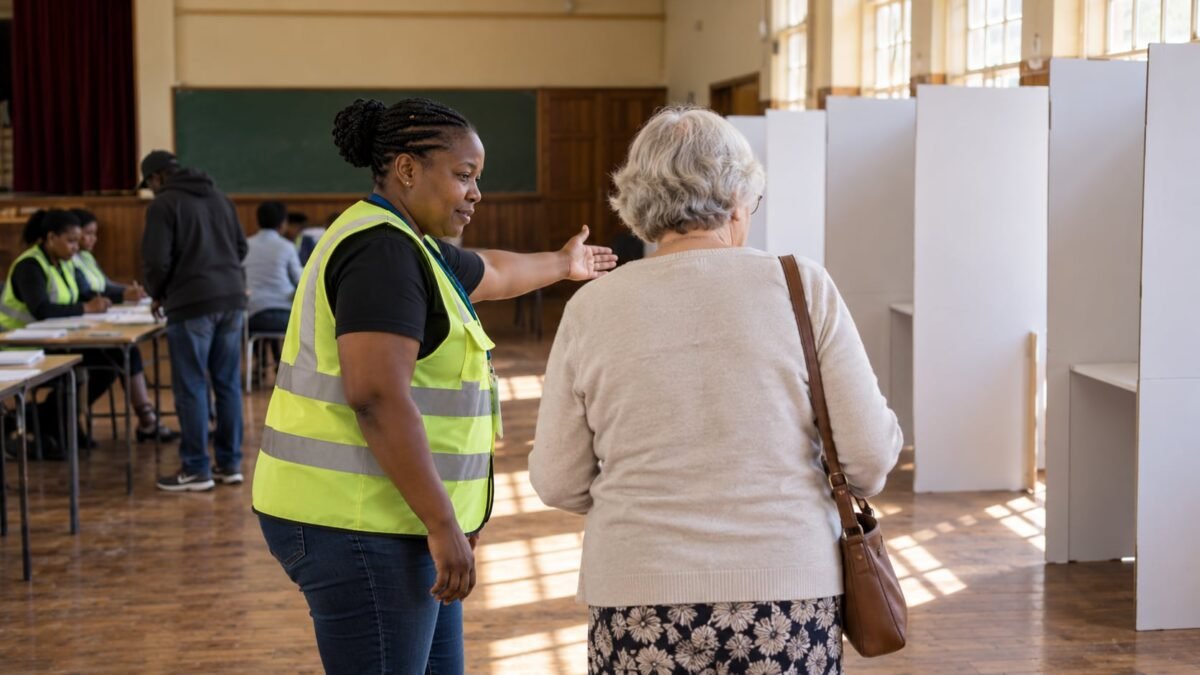
A practical plan should identify the venue, the journey and any assistance needed. Someone organising transport for several neighbours should ask each person to check their own station. Sharing a street or workplace does not necessarily mean everyone should join the same queue.
Keep personal information out of community groups when asking for help. A general question about a venue can be asked publicly; an identity number or private registration record should be handled through the Commission’s designated channels.
Preparations have moved beyond the election date announcement
The Commission’s announcement welcoming the election date established the planning date earlier in the year. The final fortnight raises different questions: whether an individual is ready to vote, whether their arrangements are confirmed and where to obtain corrections when information conflicts.
An announced timetable and a completed operational milestone are different things. Where an earlier update said work was expected to finish on a later date, that expectation should not be reported as proof that the work has finished.
For voters, this is a useful way to read campaign season claims. Look for the date of the source, who issued it and whether it describes a completed event, a plan or an allegation. A screenshot stripped of its date can make an old instruction look current.
The local ballot concerns everyday government
Municipal elections determine representation in local councils. They are separate from national and provincial elections, even when the same political parties compete and national leaders dominate campaign coverage.
The Constitution’s local government chapter sets out the constitutional framework for municipalities, including democratic and accountable local government and the provision of services in a sustainable manner. The powers of councils sit within that wider constitutional structure.
That helps put campaign promises into perspective. A promise about a local service should prompt questions about municipal responsibility, funding and implementation. A promise concerning another sphere of government needs a different explanation of how a councillor could deliver it.
For a resident comparing candidates, concrete questions are more useful than a long list of slogans. What would the candidate prioritise in the ward? How would residents receive updates? How would unresolved complaints be escalated? What would be reported back after a council meeting?
Keep campaign claims separate from voting instructions
Political messages and official voting instructions serve different purposes. A party can explain its programme, but the Commission remains the place to verify where and how to vote.
This distinction becomes important when a message says a venue has moved or that a category of voters should stay away. Before forwarding it, compare it with an official notice or ask the relevant electoral office. Repeating an unverified instruction can inconvenience other voters even where the sender intended to help.
Community administrators can make their groups more useful by keeping a clear link to official election information. They can also ask contributors to include the date and original source of operational announcements instead of sharing cropped images alone.
Accessibility should be part of the plan now
For voters with mobility, communication or other access needs, waiting until arrival can make a manageable problem harder. Contact the Commission through its current official channels to clarify the arrangements relevant to the individual and venue.
Someone helping a relative should ask what support the relative actually wants. Assistance with transport, reading an official notice and making a voting decision are different activities. The person’s own choice remains central.
If an arrangement is unclear, write down the question before calling. Identify whether it concerns an approved special vote, getting into a venue or the ordinary voting process. Specific questions are easier for the relevant office to answer accurately.
What to do before the final week
The next useful step is a short personal readiness check: confirm your registered station, find your identification document, check any approved special vote and organise transport where necessary.
Keep the latest official information somewhere you can access without searching through campaign messages. If a problem appears, raise it while there is still time to obtain an answer.
The election is approaching quickly, but the remaining fortnight offers time to resolve practical uncertainties. A verified venue and a realistic plan are more helpful on voting day than an assumption made during the last election.
Related reading: Municipal & Local Government; How to challenge a municipal property valuation in South Africa; Reporting a pothole or water leak: how to escalate an unresolved fault.