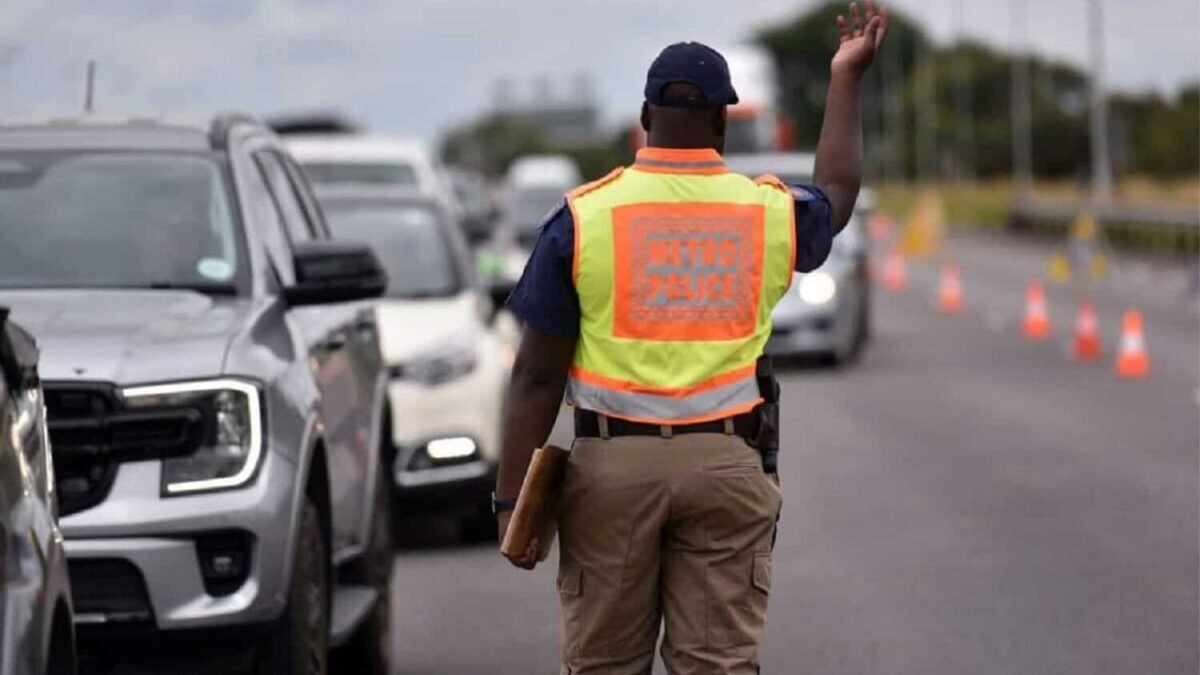
Being pulled over can make even a careful driver nervous. Knowing your rights during a traffic stop in South Africa helps you respond calmly, comply with lawful instructions and recognise when an officer may be exceeding their authority.
Traffic officers and police have powers to stop vehicles, check documents and enforce the law. Those powers have limits, but the roadside is rarely the best place to resolve a complicated legal disagreement.
The practical approach is to stop safely, understand what is being requested and preserve the information needed to challenge improper conduct afterwards.
1. Stop safely and make your cooperation clear
When an officer directs you to stop, acknowledge the instruction and pull over as soon as you can safely do so. Avoid sudden braking or movements that put other road users at risk.
A traffic officer in uniform may require a driver to stop under section 3I of the National Road Traffic Act. The officer does not first have to establish that you committed a particular offence: a lawful stop may involve routine checks.
Use your indicator and choose a safe stopping position. If a well-lit spot is immediately available, it may make the interaction easier, particularly at night.
However, do not assume that you have an unrestricted right to continue driving until you reach your preferred destination.
If you suspect an impersonator
If something about the attempted stop creates a genuine safety concern, seek assistance from emergency services or the nearest police station as circumstances allow. Explain your location and what is happening, and follow the guidance provided.
Keep your actions predictable. Speeding away or making abrupt manoeuvres can create further danger.
Once stationary, keep your hands visible. Before reaching into a bag, pocket or glove compartment, explain that you are retrieving your licence.
2. Provide the documents the law requires
Carry your valid driving licence and produce it when lawfully requested. Ensure the vehicle’s licence disc is current and displayed as required.
Additional documents may apply to particular vehicles or activities, including professional driving and commercial transport. Traffic officers have statutory powers to demand documents prescribed under road traffic legislation.
Avoid treating advice from another country as a South African checklist. For ordinary domestic private driving, proof of private motor insurance is not a standard compulsory roadside document, and drivers are not generally required to carry the original vehicle registration certificate.
Insurance information can still be useful after a collision, and finance agreements may require insurance. That is separate from what must ordinarily be produced during a routine stop.
If an unfamiliar document is requested, politely ask what it is and which requirement applies.
3. You may ask who the officer is
If you are uncertain about a traffic officer’s authority, ask politely to see their certificate of appointment.
Section 3A(6) of the National Road Traffic Act requires an authorised officer to produce that certificate at the request of a person with a material interest in the matter.
You can also ask for the officer’s name and the department or station they belong to.
Record the details accurately where possible. A name, appointment number, vehicle registration and location may help identify the officer if a complaint becomes necessary.
An identification request should remain calm and practical. If the officer refuses, note the refusal without turning the interaction into a physical confrontation.
4. Ask what the stop concerns
A simple question can clarify the situation: “Officer, is this a routine check, or is there an alleged offence?”
The answer helps you understand whether the officer wants documents, is checking the vehicle’s condition or is investigating something more serious.
A routine traffic stop should not be confused with a roadblock established under separate police legislation. In National Commissioner of Police v Coetzee, the Supreme Court of Appeal addressed the distinction between stopping a vehicle under road traffic powers and a roadblock under the South African Police Service Act.
This matters because the legal authority for stopping a vehicle and the authority for searching it are separate questions.
If an instruction is unclear, ask for an explanation. Avoid assuming that every request is unlawful merely because the officer has not accused you of speeding or another traffic offence.
5. Silence does not remove every legal obligation
You do not need to volunteer an admission of guilt or offer a lengthy explanation of an alleged offence.
However, saying “I have the right to remain silent” does not automatically excuse refusing to produce your licence or provide identifying particulars when the law requires them. Traffic legislation gives officers powers to require identifying information in specified circumstances.
Answer required identification questions accurately. Do not invent a name, address or explanation.
If questioning moves beyond routine particulars and concerns suspected criminal conduct, you can ask to obtain legal advice before making a substantive statement.
If you are arrested
Section 35 of the Constitution protects an arrested person’s right to remain silent, to be informed of that right and its consequences, and not to be compelled to make a confession or admission that could be used against them.
Remaining calm and providing required documents does not mean that you must agree with the officer’s allegation.
6. A search needs lawful authority, but a warrant is not always necessary
The statement “Police cannot search without a warrant” is incomplete.
Under section 22 of the Criminal Procedure Act, a police official may conduct a relevant search without a warrant where valid consent is given. Alternatively, the official must reasonably believe both that a warrant would be issued and that the delay in obtaining it would defeat the purpose of the search. Searches following arrest are addressed separately.
A vague reference to “probable cause” does not explain the South African statutory requirements.
Roadblocks have additional search powers
At a roadblock or checkpoint lawfully established under the applicable provisions of section 13(8) of the South African Police Service Act, police may search stopped people and vehicles without obtaining individual search warrants.
Where a search relies on the written roadblock authorisation, an affected person may demand to see a copy. The Act also provides for specified urgent circumstances in which a roadblock may be established without prior written authorisation.
A traffic officer inspecting tyres, lights or other vehicle equipment is also exercising a different power from a criminal evidence search.
Ask about the legal basis without physically resisting
You can ask, “What authority are you relying on for this search?”
If consent is requested and you do not wish to give it, say so calmly. Refusing consent does not prevent a search supported by another lawful power.
If the search proceeds and you believe it is unlawful, note the circumstances and seek advice afterwards. Do not physically obstruct the officer or attempt to conceal or destroy anything.
7. Cooperate with lawful testing and safety instructions
An officer may ask you to leave the vehicle for a lawful inspection, investigation or safety purpose. Staying seated until instructed is sensible practical advice, but it should not be treated as a rule allowing you to refuse a lawful instruction to get out.
Similarly, the right to silence should not be confused with a right to refuse lawfully required alcohol testing or specimen collection.
Ask what is required if you do not understand. Explain any relevant medical difficulty promptly.
Road traffic legislation prohibits obstructing officers in the lawful exercise of their powers and failing to comply with instructions given under those powers.
You can question an instruction respectfully while keeping your movements slow and predictable.
8. Recording can help preserve evidence
You may generally photograph or record officers performing their duties in public, provided you do not interfere with lawful operations. Recording does not give you permission to obstruct an officer, enter a restricted area or ignore a lawful safety instruction.
If you record, keep the device positioned safely. A passenger may be better placed to do so while the driver handles the interaction.
Avoid pushing a phone into an officer’s face or moving into traffic to obtain footage.
Preserve the original recording
Keep the complete file, including what happened before and after the disputed incident. Back it up when safe.
Recording and publishing are separate decisions. Footage may contain private information, children or people whose identities are legally protected. Consider obtaining advice before posting it publicly.
If an officer demands your device or asks you to delete footage, ask for the legal basis and note the response. Prioritise your physical safety if the situation becomes threatening.
9. Use official payment channels
Never offer money, a gift or another favour to persuade an officer to overlook an offence.
Corrupt payments involving public officers are criminalised under the Prevention and Combating of Corrupt Activities Act. Both offering a corrupt benefit and accepting it can create criminal liability.
If a fine is issued, check the notice and use the official payment or dispute procedure. Do not pay an officer personally to “make the problem disappear”.
If an officer requests an unofficial payment, record the words used and identifying details when safe. Report the demand through the appropriate channel.
Read any document before signing it. Ask whether your signature acknowledges receipt or has another legal effect.
10. If you are arrested, ask for the reason and legal assistance
Ask what alleged offence has led to your arrest and where you are being taken.
The Constitution protects detained people’s right to be informed promptly of the reason for detention, to consult a legal practitioner and to communicate with specified people, including a spouse or partner, next of kin and a medical practitioner. State-funded legal assistance is subject to the constitutional requirements.
Ask to contact your attorney or obtain legal assistance. If you require medication or medical treatment, explain this immediately.
Do not assume that every arrest requires a warrant. Equally, an officer’s assertion of authority does not make every arrest lawful.
Keep track of the location, times and officers involved as far as possible. Those details may become important when the legality of the arrest or detention is assessed.
11. Report misconduct to the appropriate body
Once you are safe, write down what happened while it is fresh.
Useful details include:
-
The date, time and exact location.
-
The officer’s name and identifying number.
-
The department, station and vehicle details.
-
The instructions given and your responses.
-
Any threats, injuries, searches or payment demands.
-
Witness details and available recordings.
-
Copies of notices, receipts or other documents.
If you were injured, obtain medical attention and preserve the medical records.
IPID does not handle every roadside complaint
IPID investigates specified matters involving SAPS and municipal police officers, including serious allegations such as torture, assault and corruption within its statutory mandate. It is not a general appeal body for traffic fines or every instance of discourtesy.
For other misconduct, use the relevant police, metro police or traffic department’s complaints process. Provincial or municipal traffic officers who are not members of SAPS or a municipal police service should not automatically be treated as falling within IPID’s jurisdiction.
A suspected crime can also be reported to SAPS. Ask for a reference number and retain a copy of your complaint.
Challenging a fine, reporting misconduct and pursuing a legal claim are separate processes. A complaint does not automatically cancel the fine or suspend its deadlines.
Calm cooperation and informed questions work together
During a traffic stop, focus on safety, required documents and clear communication. Ask who the officer is, what the stop concerns and which authority supports an unfamiliar request.
If you believe something unlawful has happened, preserve the evidence and use the appropriate complaint or legal process.
Knowing your rights helps you make considered decisions at a moment when nerves can otherwise take over.