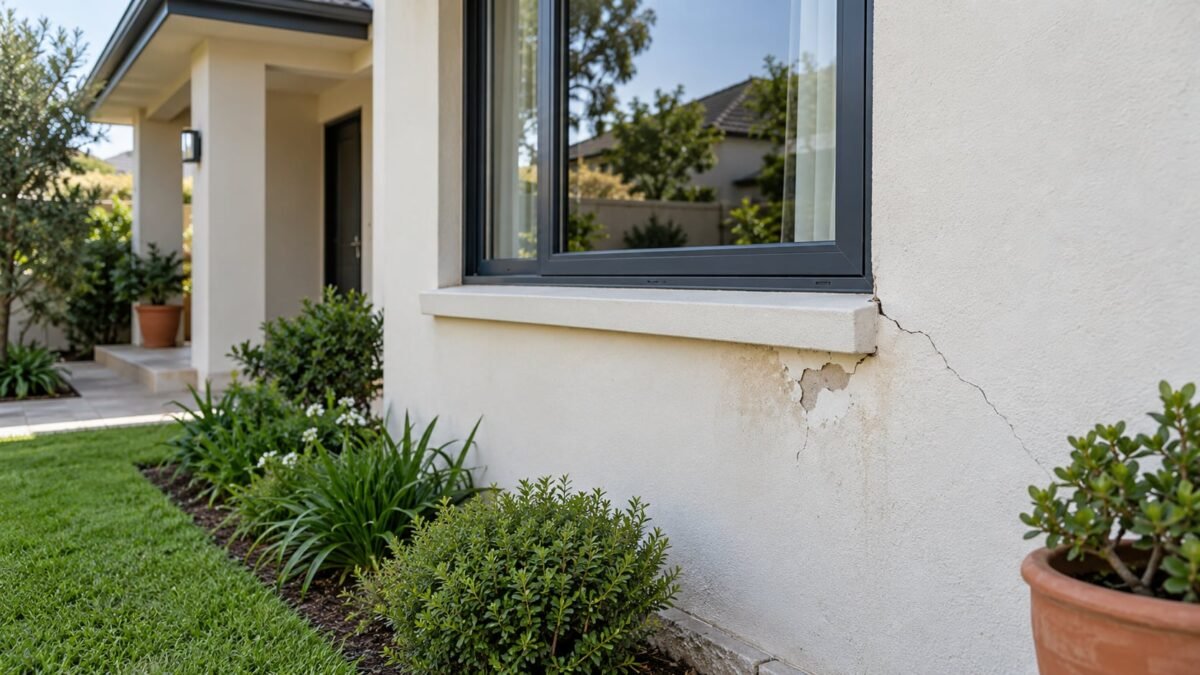
Moving into a newly built home should mark the end of a demanding project. Instead, you may discover water running down a wall, doors that will not close or cracks that keep widening. The builder says the house needs to settle. You are left wondering which problems are ordinary snagging and which need urgent attention.
Building defects in South Africa can raise contractual, technical and statutory issues. A homeowner’s strongest starting point is to identify the problem accurately, notify the responsible parties in writing and preserve evidence. Waiting for an informal promise can make all three tasks harder.
For qualifying new homes, the National Home Builders Registration Council, or NHBRC, provides an important regulatory and complaint framework. Its involvement is different from managing your building contract or guaranteeing every aspect of the finished property.
1. Find out whether the home is enrolled
Builder registration and home enrolment are separate matters. A builder’s registration does not, by itself, prove that your particular home was enrolled. Obtain the registration details and the enrolment certificate and check them directly with the NHBRC.
The NHBRC explains that enrolment allows inspections at stages of construction and provides access to the applicable protection framework. Its inspectors conduct spot checks. They are not appointed to run the project or provide continuous quality control for the homeowner.
See the NHBRC’s explanation of home enrolment.
Keep the building agreement, approved plans, specifications, payment records and handover documents together. If you bought from a developer rather than contracting directly with a builder, identify both entities and establish which agreement governs each obligation.
An existing home, an extension and a newly built enrolled home may involve different routes. Confirm the position rather than assuming every construction dispute belongs within the same NHBRC process.
2. Distinguish snagging from a structural concern
Snagging commonly refers to incomplete or defective finishing work: chipped tiles, poor paintwork or a cupboard door fitted incorrectly. A structural concern may involve movement, foundations or another issue affecting the building’s stability or integrity.
The distinction can be difficult without technical expertise. A crack’s size alone does not always identify its cause. A repeated leak might arise from flashing, waterproofing, drainage or a more extensive design problem.
If there is a safety concern, seek prompt assessment by an appropriately qualified professional. A professional report can describe the defect, likely cause, risk and recommended repair. It should also distinguish observations from conclusions that require further testing.
Do not accept “all houses crack” as a complete explanation. Equally, avoid assuming every hairline crack proves structural failure. The useful question is what the particular evidence shows.
3. Notify the builder within the applicable period
The NHBRC’s published guidance identifies obligations concerning defects notified within three months of occupation, roof leaks within one year and major structural defects manifesting within five years. The categories and conditions matter.
These periods should not be treated as interchangeable warranties covering every defect. The NHBRC expressly notes that the three month maintenance or snag list period is not covered by its warranty fund. Builder obligations and potential NHBRC rectification assistance therefore need to be distinguished.
See the NHBRC’s warranty cover guidance.
Write as soon as you discover a problem. State the occupation date, when the defect appeared, where it is located and what you want the builder to do. Attach dated photographs and ask for a written response and inspection arrangement.
If a leak occurs during rain, photograph its location and visible effects while it is happening, provided it is safe. A dry wall weeks later may show damage without demonstrating how the water entered.
4. Make the defect record easy to follow
Create a numbered list with one issue per entry. Give each issue a location, date and photograph reference. A simple description is often more useful than a lengthy accusation.
For example: “Bedroom two, lower left corner of the window, water enters during rain. First observed on 8 October. Photographs 4 and 5.” That allows the builder, inspector or engineer to identify the issue quickly.
Your supporting file can include:
- The contract and relevant plan or specification pages.
- Proof of occupation and handover dates.
- Photographs showing changes over time.
- Written notifications and delivery evidence.
- Inspection reports and repair quotations.
- A record of damage to possessions or other resulting loss.
If someone repairs the problem, record what was found before materials are removed. Keep relevant invoices and the contractor’s observations. Where a dispute is likely, ask about preserving samples or additional photographs before the work starts.
5. Give repair proposals proper attention
A proposal to repaint a damp wall may address the appearance without addressing the water source. Ask what caused the defect, how the proposed work will correct it and how the result will be checked.
For more serious work, request a written method, the responsible professional and a realistic programme. Clarify who will protect furniture, arrange access and make good the affected areas afterwards.
Access arrangements should be reasonable and recorded. If the builder offers to inspect and you repeatedly refuse access without justification, that can complicate the dispute. If access presents safety or security concerns, explain them and propose workable alternatives.
Avoid signing a broad release merely to obtain a limited repair. A document stating that all claims are settled may extend beyond the defect being addressed. Read the wording and obtain advice if it affects unresolved problems or substantial losses.
6. Use the NHBRC complaint process where it applies
The NHBRC publishes a process for complaints about qualifying defects. It may involve assessing the complaint, communication with the builder and conciliation. Not every complaint results in repair at the NHBRC’s expense.
See how to lodge an NHBRC complaint.
Submit the required documents and use the complaint reference in later correspondence. Identify the defect category rather than sending an unexplained folder of photographs. If you are uncertain whether the complaint falls within the process, ask for a written explanation.
The complaint route does not automatically resolve claims for every financial consequence. Temporary accommodation, damage to belongings or contractual penalties may require separate consideration. Ask which issues the process can address and which need another remedy.
Keep track of legal and contractual deadlines while the complaint is being handled. An informal negotiation should not be assumed to stop every limitation period.
7. Be careful before withholding payment or cancelling
An unpaid balance can feel like the only bargaining power you have. Whether you may withhold it depends on the contract, the stage of performance and the applicable law. Stopping payment without checking those issues can create a separate dispute.
Similarly, appointing a replacement contractor or cancelling the agreement may require notice and an opportunity to remedy a breach. The agreement may prescribe a dispute process or the involvement of a contract administrator.
Obtain advice before taking a step that changes the contractual relationship. Give the adviser the complete agreement and correspondence, including any messages in which you agreed to variations or extensions.
Where urgent work is needed to prevent harm, focus first on safety and reasonable damage prevention. Document why the work could not wait and retain the evidence supporting that decision.
Get the cause addressed before closing the file
A successful repair should solve the underlying defect and leave a record of what was done. Inspect the work, keep the supporting documents and continue monitoring where a professional recommends it.
Written notification, clear evidence and the right technical assessment give a building dispute a workable direction. They also make it easier to distinguish a repairable snag from a problem that deserves more serious intervention.