
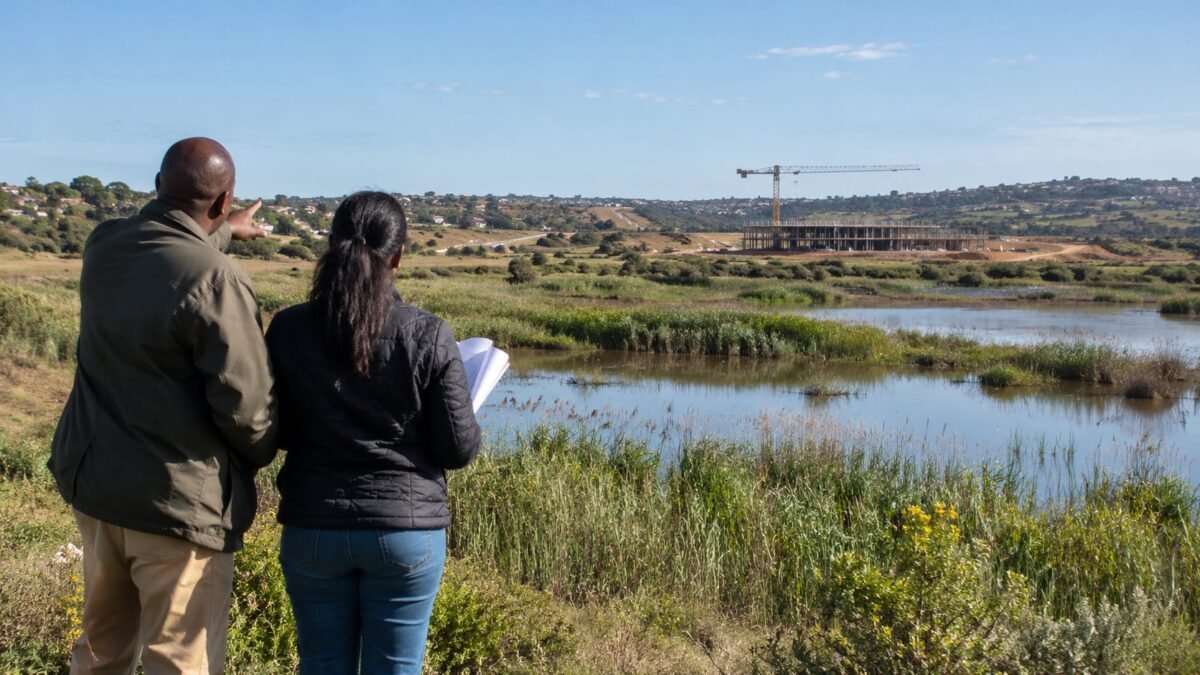
A notice appears on a fence announcing a proposed development. You are concerned about noise, water, traffic or the effect on a nearby wetland, but the notice refers to reports and an environmental practitioner you have never heard of. It is easy to assume that the decision has already been made.
An environmental assessment process can provide an opportunity to raise concerns before authorisation is decided. To use that opportunity, you need to identify the project, register where appropriate and submit comments that explain the environmental issue clearly.
Find out which process the notice concerns
Not every development requires the same approval. An environmental authorisation process is different from a rezoning application, building plan approval or water use process. Several approvals may be relevant to one project.
Read the notice carefully. Record the project name, reference number, location, applicant, environmental assessment practitioner and authority responsible for the decision. Note the comment deadline and where documents can be obtained.
If the notice is unclear, ask the listed contact person for an explanation. Do not assume that submitting a planning objection also registers you in the environmental process. Confirm which application your communication will be attached to.
Understand why public participation matters
The National Environmental Management Act, usually called NEMA, and the applicable environmental assessment regulations provide a framework for participation. The process is intended to give interested and affected people a reasonable opportunity to contribute relevant information.
The Government publishes public participation guidance under the environmental assessment regulations. It is useful for understanding the role of the applicant, practitioner, authority and participating public.
Participation does not give every neighbour a veto. It gives you a route to place relevant concerns before the decision maker. The quality of the information you provide can matter more than the number of messages you send.
Register as an interested and affected party
Ask how to be added to the project’s register of interested and affected parties. Supply the details requested through the official project channel and ask for confirmation.
Explain your connection to the project. You might live nearby, own adjoining property, use an affected road or represent a community organisation. Disclose any relevant interest as required by the process.
Keep your contact details current. If reports and notifications are sent to an old email address, you may miss an important stage. Ask where notices will be published and whether alternative access is available if you cannot download large documents.
Registration is a practical step, not the whole contribution. You still need to review the material and comment within the relevant period.
Read the report with specific questions in mind
Large reports can be intimidating. Start with the project description, location maps, impact assessment, alternatives and proposed mitigation. Identify the parts that relate to your concern.
Check whether the report describes the area accurately. Does the map show the stream you are concerned about? Is the access road the one vehicles actually use? Does the report distinguish construction impacts from impacts after the project begins operating?
Write down the page and section for each point you question. This allows the practitioner to respond to the actual statement. A comment saying that “the whole report is wrong” is difficult to assess.
If technical information is unclear, ask for an explanation rather than guessing its meaning. A measurement or model may need specialist interpretation, and a mistaken reading can distract from a valid concern.
Make your comments concrete
A useful comment connects the project to an identifiable effect. Explain what may happen, who or what may be affected and what information supports the concern.
For example, instead of writing that the project will ruin the neighbourhood, describe the narrow entrance road, the times children walk along it and the proposed increase in heavy vehicle movements. Ask how those risks have been assessed and managed.
Where you have local information, identify its source. Dated photographs of flooding, a map of drainage paths or records of an existing problem may be helpful. Do not present speculation as an established scientific finding.
Suggest a practical response where you can. It might be an alternative access point, further assessment or a clearer monitoring arrangement. You do not have to design the entire solution to identify a relevant omission.
A local observation becomes more useful when another person can verify it. If a road already floods, identify the location, dates and conditions, and attach photographs with a short explanation. Ask how the proposed drainage design addresses that experience rather than simply stating that the development will cause flooding.
Read the response to your comment when it becomes available. Check whether it answers the issue or merely records that you objected. If information has changed, explain the remaining concern precisely. Public participation works better when submissions and responses can be followed as a conversation about the actual impacts.
Distinguish impacts from proposed mitigation
A report may acknowledge a risk and propose a measure to reduce it. Ask whether that measure is specific enough to be implemented and checked.
“Dust will be managed” leaves several questions unanswered. Who will be responsible, what action will they take, and how will residents report a recurring problem? The same questions apply to noise, waste and water management.
Consider whether the proposed measure addresses the concern you raised. Planting trees may improve appearance while doing little to address a drainage problem. Keep the discussion connected to the actual impact.
Avoid claiming that any remaining impact makes authorisation impossible. Environmental decisions involve legal standards, evidence and the evaluation of alternatives and mitigation. Your contribution is to help ensure that the relevant issues are properly considered.
Keep the deadline and submission record
Use the period specified for the relevant report and process. If you need more time or cannot access the documents, raise the problem promptly. Do not assume an extension has been granted unless it is confirmed.
Submit comments in a readable form. Include the reference number and identify attachments. Retain the sent message, acknowledgement and the exact version submitted.
Useful material to keep includes:
- The original project notice.
- Registration confirmation.
- Reports and their version dates.
- Your comments and supporting evidence.
- The response to your comments.
- Later notices and the final decision.
If revised material is circulated, check whether the issue has changed. Repeating an old objection without reading the new response may miss both improvements and new concerns.
Follow the decision and any appeal procedure
Once a decision is made, obtain the authorisation or refusal and its conditions. Ask how you will be notified and which appeal requirements apply. Environmental appeals have their own procedures and deadlines.
A separate court challenge is not the same as another public comment. If you believe a serious procedural or legal problem remains, seek advice promptly about the appropriate route.
The National Environmental Management Act is the broader legal framework. The Constitutional Court’s Bengwenyama judgment on meaningful consultation also illustrates why consultation in a related resource context must be more than a formal exchange.
If you use a specialist report to support a comment, identify who prepared it, when and which proposal it assesses. A report about a different site may offer context but may not establish the impacts of this development. Explain its relevance and distinguish the author’s findings from your own interpretation.
Put local knowledge to useful work
You may know the area’s water flow, access problems and seasonal conditions better than someone visiting once. Translate that knowledge into specific, supported comments.
Register, read the relevant sections and meet the deadline. Those steps give your concern a proper place in the process and leave a record you can follow when the authority reaches its decision.