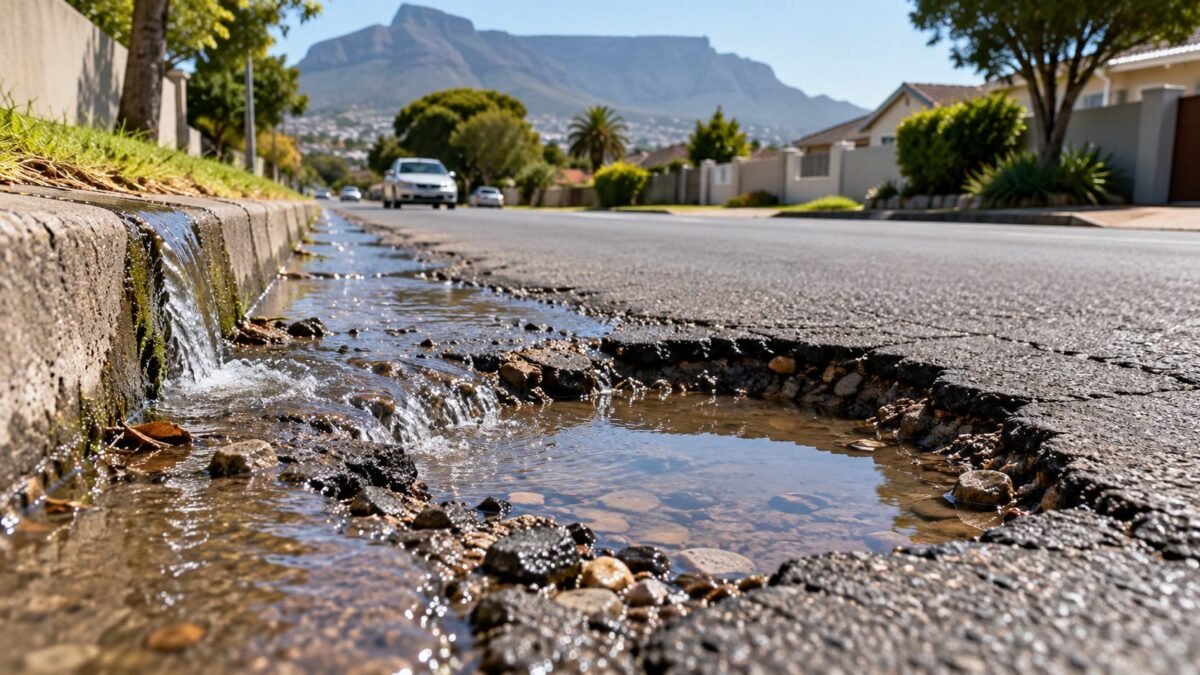
You report a water leak, receive a reference and return a week later to find water still running down the road. Or the pothole outside your home grows while neighbours forward photographs to several groups. The problem is visible, but it is not always clear who has responsibility or what the next step should be.
A useful complaint process begins with the responsible authority and a report that a work team can locate. Escalation then builds on that record rather than starting the story again every time somebody new becomes involved.
Check who is responsible
Not every road is municipal. A national or provincial road can involve a different authority, even where it passes through a town. A leak may concern municipal infrastructure, a water utility or plumbing on private property.
Ask the municipality to confirm responsibility where it is unclear. If the matter belongs elsewhere, request the correct referral rather than accepting that the municipality can do nothing. Keep the response because it explains why you approached the next body.
A private property boundary can also matter. Do not assume that visible water near a meter proves who must repair the source. Report the location and observed facts, then ask the responsible service to assess it.
Make the first report easy to locate
Give the street name, nearest number or intersection, direction of travel and a useful landmark. A map pin can help, but it should supplement a written description. Mention whether the fault is in the road, pavement, verge or private property.
Describe the hazard rather than exaggerating it. For a pothole, explain whether vehicles are swerving into oncoming traffic or whether it is hidden by standing water. For a leak, say whether it is a trickle, a burst pipe or water entering buildings.
Take photographs from a safe position. Do not stand in traffic, enter an unstable excavation or touch electrical equipment near water. Immediate danger should be reported through the appropriate emergency channel as well as the maintenance system.
Use an official reporting channel
Municipalities use different portals, apps, email addresses and call centres. The City of Cape Town’s service request page and Tshwane’s fault reporting guidance illustrate the need to use the correct local process.
A social media post or message to a councillor may draw attention, but it is not always the same as a fault logged in the service system. Ask for a reference number and confirmation of the responsible department.
Kouga Municipality describes its call centre as the first reporting point, explaining that reports are captured and directed to the relevant team. Other municipalities may organise the process differently. Follow the current official arrangements for your area.
Keep one short fault record
Record the date, reference, channel used and response received. Add photographs and subsequent changes in the hazard. If several neighbours report the same fault, share the main reference while recording any additional references created.
This helps avoid a situation where one report is marked as a duplicate and everybody assumes another remains open. Ask which reference is active and whether the location has been correctly identified.
If you phone, note the time and what was said. Confirm important information in writing where possible. A statement that a team will attend today is easier to follow up if you can identify when that assurance was given.
Escalate with a clear request
If the fault remains unresolved beyond the indicated response period, follow up using the existing reference. Explain the present condition, any increased risk and the action requested. Ask whether an inspection occurred and whether a repair date has been assigned.
If the response remains inadequate, use the municipality’s complaints or escalation procedure. This may involve a supervisor, departmental manager, customer care escalation or municipal manager’s office. A ward councillor can help pursue accountability but does not replace the technical department responsible for the repair.
Attach a brief chronology rather than an unstructured collection of messages. For example: “Reported on Monday under reference X; followed up Thursday; water now reaches the neighbouring property; please confirm the responsible team and interim safety measures.”
An ombud is not available on identical terms everywhere
Some municipalities have an ombud or similar independent complaint mechanism. Check its mandate, whether ordinary complaint channels must first be used and the time limits for bringing a matter.
The Johannesburg Ombudsman’s published material illustrates escalation involving city services. It should not be presented as an office responsible for every municipality in South Africa.
Where persistent maladministration or a serious rights issue is involved, other oversight or legal remedies may require consideration. The appropriate route depends on the facts. A general maintenance delay and an urgent continuing threat to health are not necessarily handled in the same way.
A damage claim needs its own evidence
Reporting a pothole and claiming for vehicle damage are separate processes. A report reference can be useful evidence, but it does not establish liability automatically. The responsible authority, legal requirements and facts must be assessed.
Preserve photographs, the precise location, date, circumstances, repair quotations and invoices. If possible, keep damaged parts or an assessor’s report. Do not put yourself at risk returning to a hazardous road for a photograph.
Claims against public bodies can involve special notice requirements and time limits. Seek advice promptly rather than waiting indefinitely for the maintenance complaint to be resolved. A repair completed later does not by itself decide responsibility for earlier damage.
Ask for closure that reflects the actual outcome
If a report is marked complete but the fault remains, respond with the reference and current evidence. Ask whether the closure relates to an inspection, a temporary measure or a final repair. Those are different outcomes.
Residents cannot repair an entire reporting system themselves, but they can make a complaint traceable. Identify the authority, log the fault, keep the reference and escalate the unresolved issue with a clear request. That record is useful both to the team trying to fix the problem and to anyone later asked to investigate why it was left unattended.
Related reading: Municipal & Local Government; How to challenge a municipal property valuation in South Africa; Using PAIA to request records: a practical South African guide.